There comes a point when the creature quite literally outgrows itself, as its rigid shell can no longer contain its expanding body. In a masterclass of resource management, it reabsorbs the calcium from its own casing before casting it aside. By rapidly absorbing water, it expands its frame to its new proportions just before the fresh armour hardens, even repairing its limbs in the process. Known as ecdysis, this phenomenon serves as a powerful reminder that growth is rarely simple; it is a rigorous process of outgrowing the old to embrace the new.
And if there is any industry that has mirrored this relentless growth since the end of the 20th century, it is wind power. In the early 1990s, there were barely 1,900 megawatts of installed capacity worldwide. By 2023, global wind power exceeded one terawatt—one million megawatts—and by 2025, 150,000 megawatts were being installed in a single year.
Spain, supported by the vision of ACCIONA Energía, has been a pioneer in this field. Many of its facilities have been harvesting the wind for over two decades. This is the case for the Tahivilla wind farm in Cádiz. Having entered service in 2004, the site has recently completed its own metamorphosis through an ambitious repowering initiative.
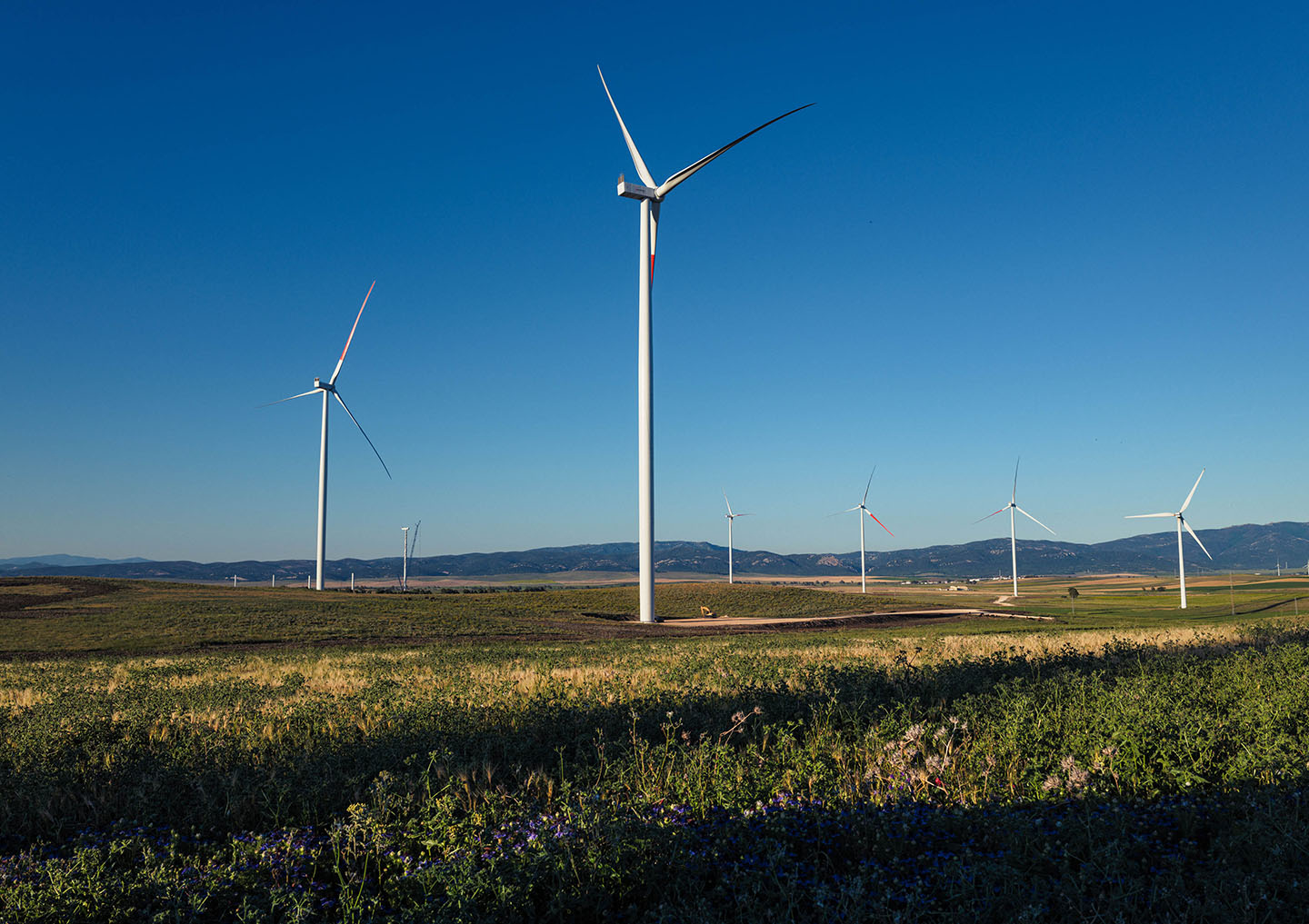
By leveraging the technological leaps of the last twenty years, the site has been transformed. Where 98 turbines once stood, there are now just 13 larger, more sophisticated units. This upgrade does more than just boost energy production with fewer machines; it has reclaimed land for indigenous flora, softened the visual impact on the landscape, and proven that renewable energy can embrace a circular philosophy and integrate cutting-edge artificial intelligence. Read on to discover how we achieved it.
The Tahivilla farm is nestled on the Cádiz coastline, an area where the wind blows in abundance and from where the pulsating contours of Africa can be seen. For twenty years, nearly a hundred turbines here have generated clean power for 42,000 homes, reaching a capacity of 78.4MW. While these machines were still functional—some turbines can operate for 30 years—ACCIONA Energía recognised the value of a significant technological leap, which was made possible through hardware manufactured by Nordex.
This upgrade was achieved through the installation of 13 wind turbines, each boasting a capacity of 6 to 7MW. Standing between 148 and 159 metres tall, these are the largest units ACCIONA Energía has deployed globally to date. However, before these new giants could rise, the original fleet had to be cleared away.
As one of the first major repowering projects in Spain, Tahivilla served as a pilot for unmapped territory—specifically regarding material management. The goal was 100% recycling, a feat that required dismantling the original turbines piece by piece and meticulously categorising every material for a second life.
The work began by carefully removing and stockpiling topsoil from the new layout and platforms to be used later in restoring the old sites. Next, the rotor blades—composed of balsa wood, fibreglass, and resins—were processed on-site for transport.
After the nacelles and towers were taken down, the foundations were removed to return the soil to its natural state, aided by hydroseeding in key areas.
This approach is consistent with the broader commitment of ACCIONA Energía to the circular economy, which saw the company recycle 99% of its total waste in 2025. At Tahivilla, the primary recovered materials are steel and concrete: the former is melted down for new products, while the latter is crushed and reused as recycled aggregate in other works. Even the turbine blades found a new purpose, with some components being repurposed as soles for a sustainable footwear collection.
Every phase of the Tahivilla project broke new ground, and the logistics of the new generation was no exception. Transporting 81.5-metre blades—roughly equivalent to the height of a 26-storey building—from the Port of Algeciras was a precision operation. The route was adjusted to the millimetre, roundabouts were modified, and streetlights were temporarily removed to clear the way.
Though the towers arrived in sections, their 5-metre diameters meant that every bridge on the route had to be vetted for clearance. It took a dozen specialised convoys to deliver the components for a single turbine. These are, after all, the largest wind turbines ever commissioned by ACCIONA Energía.
The CO2 emissions linked to the energy consumed during the manufacture, transport, and maintenance of the wind farm are offset within just six months of operation. From that point on, its entire lifetime output will be dedicated to decarbonising the grid.
Repowering provided a unique window to not only boost efficiency but to slash the embodied carbon of the infrastructure itself. For the 13 new units, the team opted for low-carbon steel and concrete. The steel used carried a footprint four times lower than the industry average, while the concrete was 2.6 times cleaner.
Adopting these sustainable foundations reduced the project’s embodied emissions—those linked to material production and use—by 11.8%. In fact, the CO2 generated during the manufacturing, transport, and assembly of the farm is “paid back” within just six months of operation. For the rest of its lifespan, the farm’s production will focus solely on decarbonising the grid, preventing a total of 3.3 million tonnes of net CO2 emissions.
While efficiency was a primary driver, the redesign also aimed to protect local biodiversity. The new layout was optimised to clear high-traffic avian flight paths, supported by a sophisticated protection strategy.
In ancient times, augurs studied the flight of birds to divine the future. At the Tahivilla wind farm, environmental monitors also scan the skies, but for a different purpose: to safeguard biodiversity. Whenever a flock approaches—often part of a major annual migration—the machines stop so as not to interfere with their passage. In a pioneering move, we have introduced a solution that merges high-definition vision with artificial intelligence.
Nine 360° high-resolution cameras use deep learning to identify the specific species of birds in the vicinity. If a risk is detected, the wind turbines shut down automatically. Furthermore, the data collected provides invaluable insights into the species and populations crossing the Strait.
This detection-and-stop technology is now active across five ACCIONA wind farms. The resulting data will allow the Universidad Autónoma de Madrid to conduct advanced ornithological studies. Simultaneously, the company remains dedicated to protecting nesting sites for endangered species, such as the Montagu's harrier.
Repowering is as much a social and cultural shift as it is an industrial one. A wind farm is never an abstraction; it is a fixed part of a human and ecological landscape. This project generated over 1,000 local jobs across the decommissioning and construction phases. We also established a community information hub to consult with residents on social legacy projects.
The result is a suite of local initiatives, from signposting the Facinas – Los Tornos trail to launching cultural and sports programmes for disadvantaged children and active ageing workshops that celebrate the region's botanical and culinary heritage.
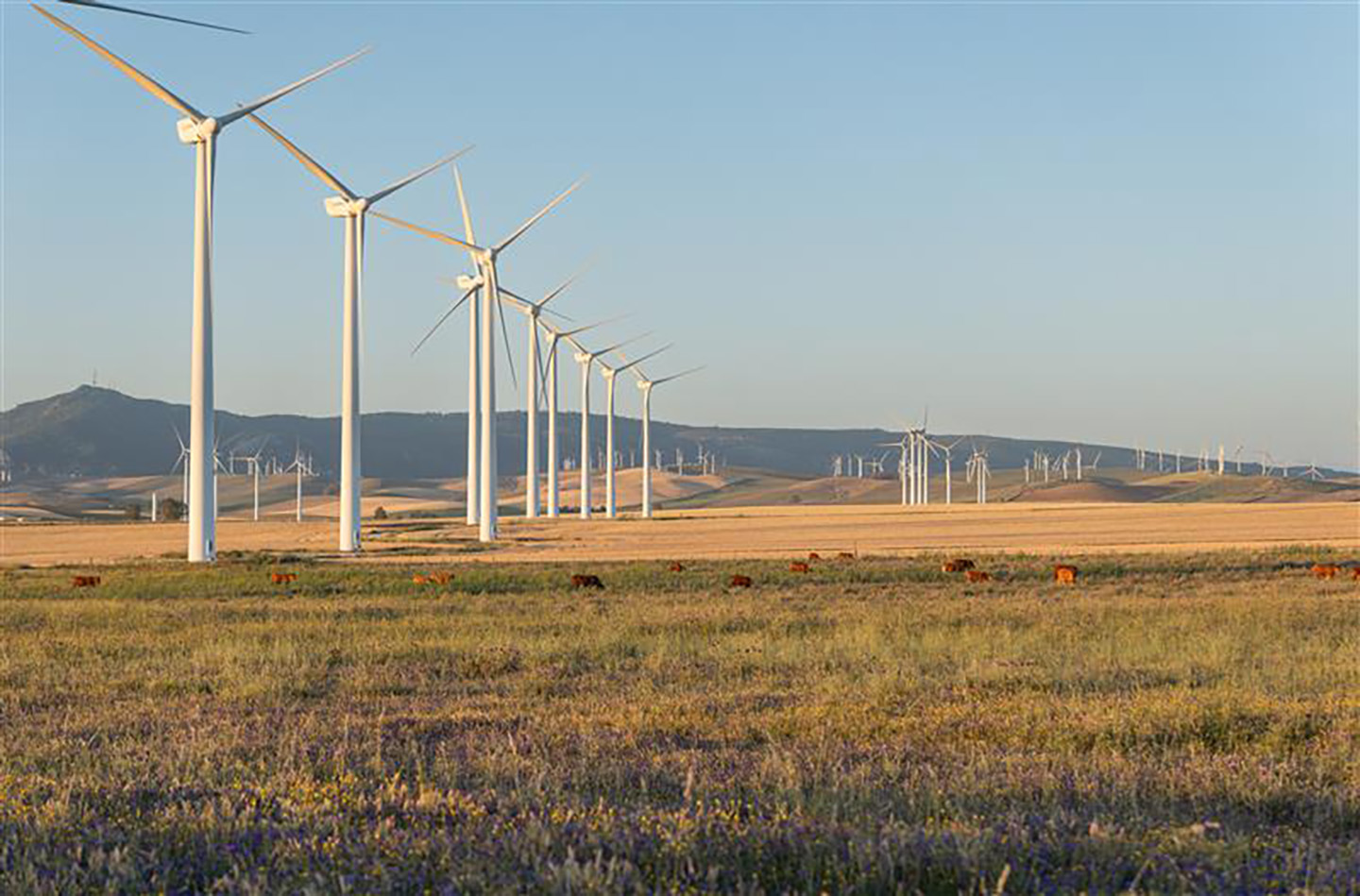
Today, the revitalised wind farm is fully operational, occupying its footprint more efficiently than ever. The original vegetation has reclaimed its space, and agricultural and livestock activities have returned to these fertile lands, where sunflowers bloom and Retinta cattle graze. Following a complex feat of engineering and logistics that created over a thousand jobs, Tahivilla is now ready to produce clean energy for decades to come, coexisting peacefully with the flora and fauna of the Tarifa countryside.
The Tahivilla repowering project received 8.3 million euros in funding from the Plan de Recuperación, Transformación y Resiliencia (PRTR), financed by the European Union - NextGenerationEU.